
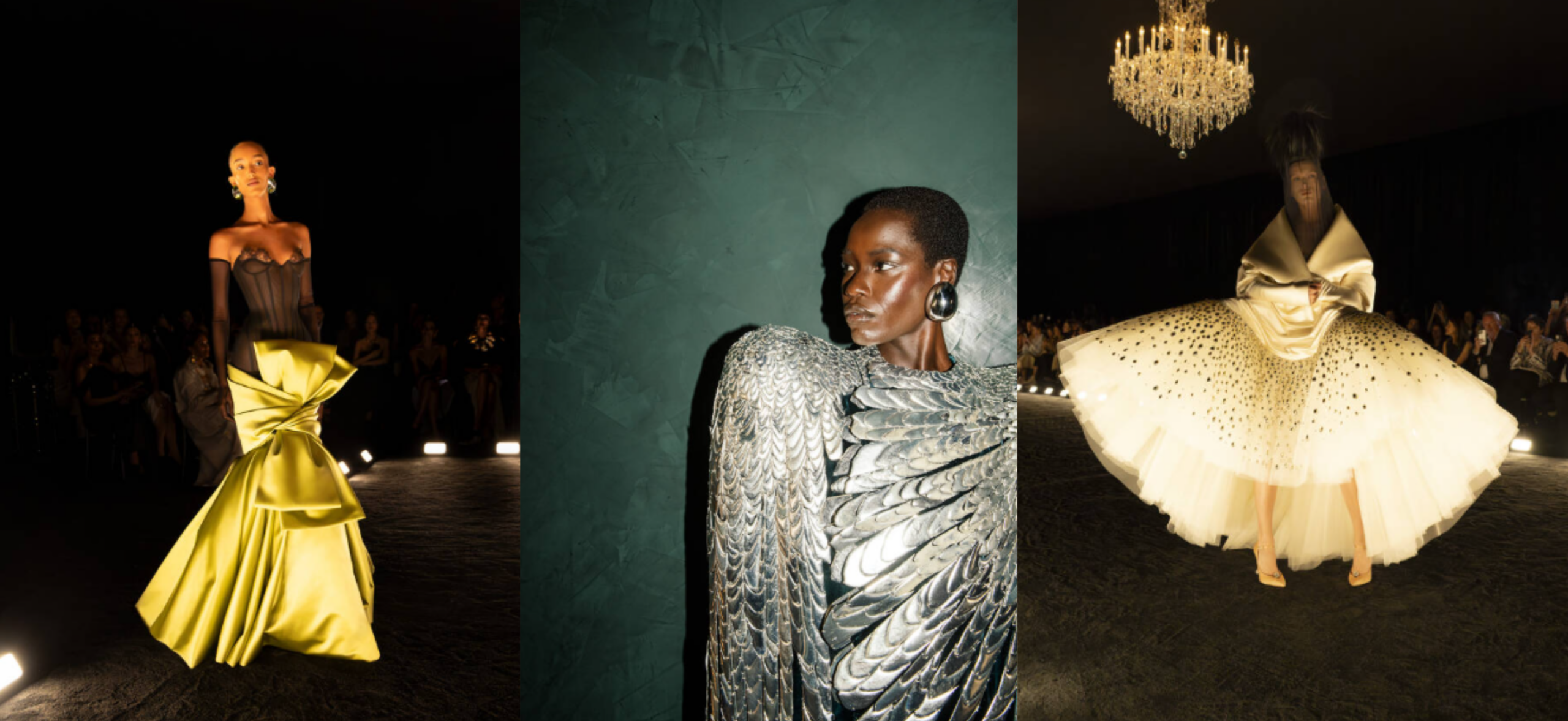

At the Victoria and Albert Museum in London, Schiaparelli: Fashion Becomes Art arrives at a moment when fashion is increasingly expected to justify its place within culture. More than a retrospective of one of the twentieth century’s most unconventional designers, the exhibition asks a question that has followed fashion for decades without ever receiving a definitive answer. At what point does clothing become something more than clothing?
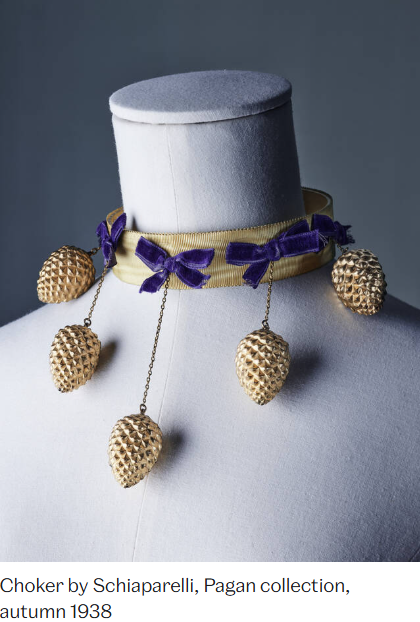
As the first major UK exhibition devoted to Elsa Schiaparelli, it traces her career from the late 1920s to the present day, placing her original creations alongside contemporary couture by Daniel Roseberry. Garments, jewellery, photographs, sketches, perfume bottles and archival material unfold across the galleries, revealing a designer whose influence extends far beyond silhouette or style. What emerges is not simply the history of a fashion house, but the portrait of a creative philosophy that continues to shape the way fashion is understood today.
Schiaparelli never treated clothing as decoration alone. Her collections challenged proportion, distorted the body and turned familiar objects into unexpected forms. Hats resembled shoes, skeletons appeared beneath evening dresses and embroidered lobsters occupied the centre of silk gowns. These were not gestures designed to shock for their own sake. They questioned how clothing could alter perception, inviting viewers to look twice rather than simply admire what stood before them.
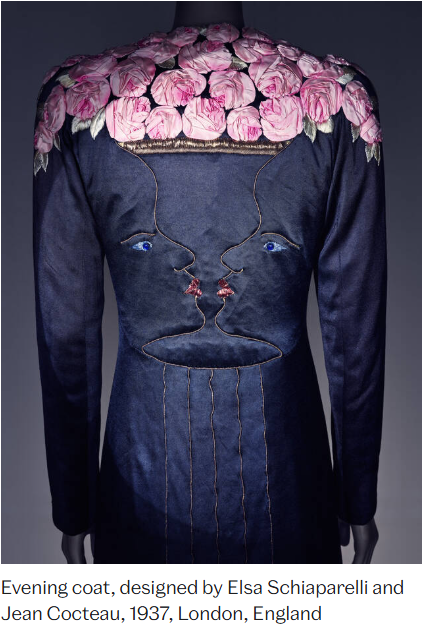
That approach developed through her close relationship with the Surrealist movement. Collaborations with Salvador Dalí, Jean Cocteau and other artists produced some of the most recognisable works in fashion history, including the Lobster Dress, the Skeleton Dress and Cocteau’s embroidered evening jackets. Rather than borrowing artistic references, Schiaparelli treated fashion as part of the same creative conversation, dissolving the boundary between garment and artwork.
Walking through the exhibition today, it becomes striking how contemporary that approach still feels. Fashion now exists within an image economy where collections are experienced as much through photographs and screens as through the garments themselves. Visual impact has become inseparable from cultural relevance. Schiaparelli understood the power of memorable images long before fashion entered the digital age, not because she sought spectacle, but because she recognised that a garment could carry an idea as effectively as a painting or sculpture.
That perspective helps explain why the house has regained such prominence under Daniel Roseberry. His couture does not attempt to recreate Elsa Schiaparelli’s surrealism as a historical exercise. Instead, it continues the questions she began asking almost a century ago. Anatomical jewellery, sculptural silhouettes and oversized gold details all challenge conventional ideas of beauty while remaining unmistakably contemporary. The result is not nostalgia, but continuity.
The exhibition presents this dialogue with remarkable clarity. Rather than separating past from present, it suggests that Schiaparelli’s identity has always depended on interpretation rather than repetition. Its heritage lies less in recognisable motifs than in a willingness to challenge expectations through imagination, humour and contradiction.
That distinction feels especially relevant today. Luxury is often measured through rarity, craftsmanship and heritage, qualities that remain central to haute couture. Schiaparelli adds another dimension by suggesting that intellectual curiosity can itself become a form of luxury. These garments ask for more than admiration. They ask to be read, questioned and interpreted.
It is difficult to ignore how closely that idea resonates with the current state of fashion. As audiences become increasingly sceptical of branding, exclusivity and spectacle, collections are judged not only by what they look like but by what they contribute to a wider cultural conversation. The question is no longer whether fashion can be artistic. It is whether it has something meaningful to say.
Schiaparelli: Fashion Becomes Art offers one possible answer. Fashion acquires cultural significance when it changes the way we see. A garment capable of reshaping ideas about the body, identity or beauty begins to operate differently from an object made simply to be worn. It enters the realm of culture without ceasing to be fashion.
In that sense, the exhibition extends beyond Elsa Schiaparelli herself. It reflects a broader shift across the industry, where fashion houses increasingly function as cultural institutions as much as luxury brands. Runway collections generate exhibitions, books, films and public debate, expanding the role of fashion far beyond seasonal consumption.
Nearly a century after Elsa Schiaparelli first challenged the conventions of dress, her work continues to resist easy definition. That resistance may be her most enduring legacy. The exhibition reminds us that fashion has always been at its most compelling when it refuses simple answers, allowing elegance and absurdity, beauty and discomfort, craftsmanship and imagination to exist within the same garment.
Perhaps that is why this exhibition feels so timely. It does not argue that fashion should aspire to become art. Instead, it suggests that, at its most ambitious, fashion has always possessed the ability to occupy both worlds at once.
May