
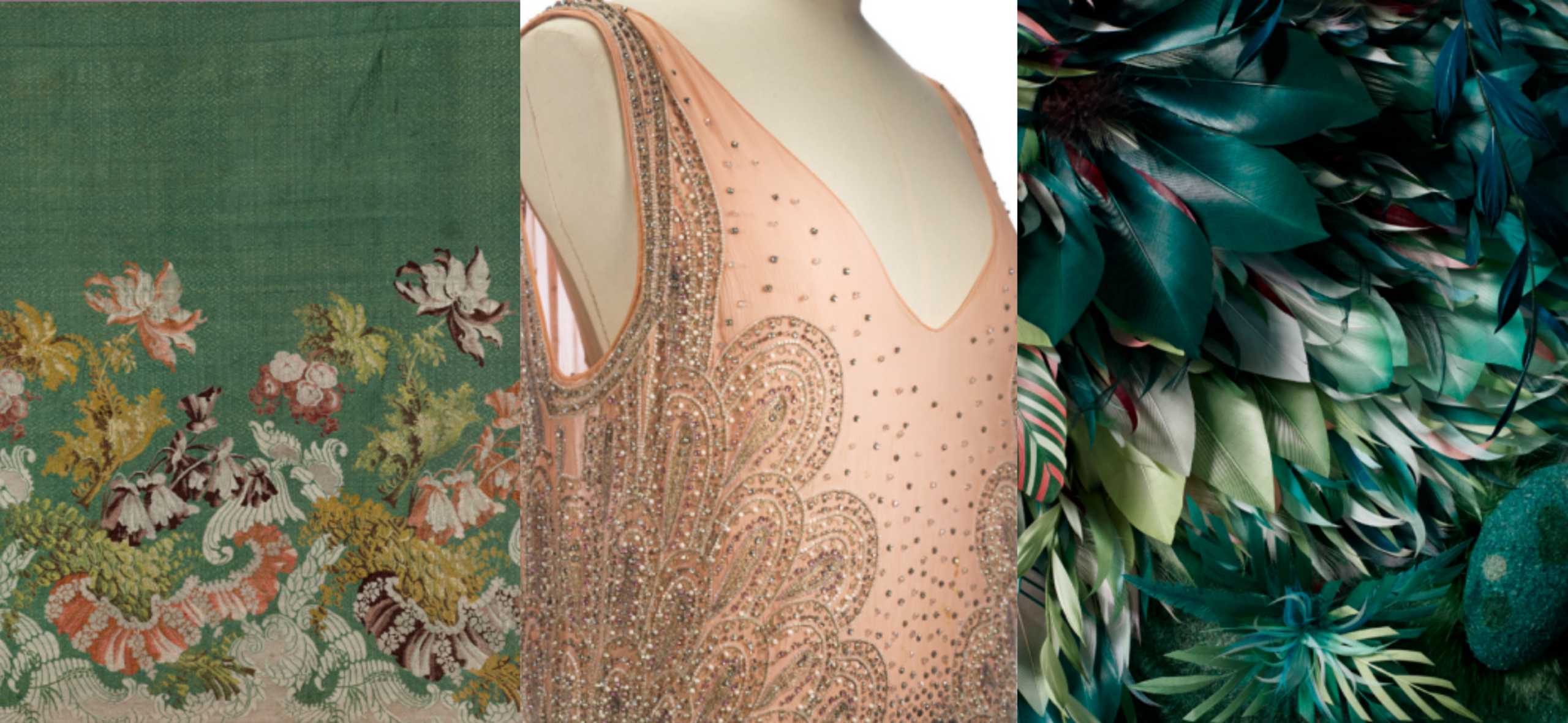

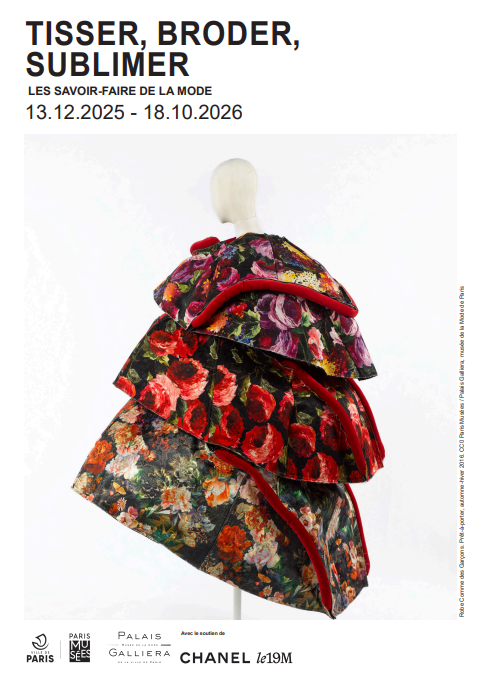
Craft, technique and mastery are often associated with preservation. They evoke heritage, tradition and knowledge passed from one generation to the next. At the Palais Galliera, however, Tisser, broder, sublimer: les savoir-faire de la mode invites visitors to look at these ideas from another perspective. Rather than celebrating finished garments, the exhibition turns its attention to everything that happens before they exist.
As the first chapter of a broader programme dedicated to fashion savoir faire, the exhibition spans the eighteenth century to the present day through more than 350 textiles, garments, samples, tools, documents and contemporary works. Instead of following the history of fashion through silhouettes or designers, it traces the gestures, materials and techniques that make those silhouettes possible in the first place.
Before form
Fashion is often remembered through its final image. Here, the process takes precedence.
Threads become fabric. Surfaces are transformed through weaving, embroidery or printing. Patterns emerge through repetition rather than appearing all at once. Long before a garment acquires its silhouette, it exists as a sequence of technical decisions, each one shaping the next.
By shifting the focus towards these often overlooked stages, the exhibition suggests that creation begins not with an idea, but with a gesture.
Flower reconsideration
Among the recurring themes is one of fashion’s oldest decorative motifs, the flower. Yet throughout the exhibition, floral forms rarely function as simple ornament.
Whether woven directly into textiles, embroidered by hand or assembled into three dimensional elements, they become part of the material’s construction. Their role extends beyond appearance, influencing texture, density and volume while revealing how decoration can participate in the architecture of a garment.
Seen in this context, the flower becomes less a motif than a technical language, interpreted differently across centuries while remaining central to the evolution of textile making.
Technique that shapes the garment
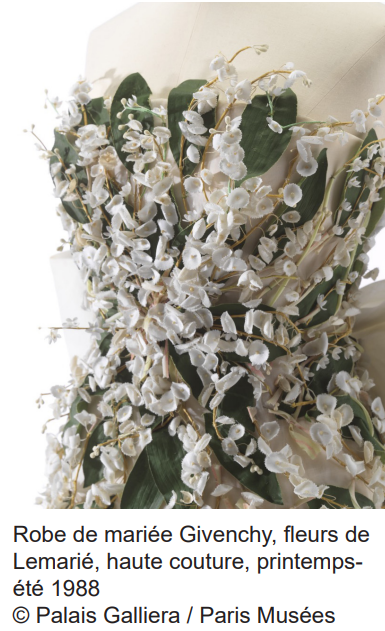
That same relationship between appearance and construction runs throughout the exhibition.
Embroidery, lace, passementerie, dyeing and textile printing reveal themselves as structural tools rather than decorative finishes. Beads alter the weight of a fabric. Dense embroidery changes the way a garment falls. Threads tighten, pull or redirect the surface, influencing movement as much as visual effect.
The closer the viewer looks, the clearer it becomes that these techniques do not simply embellish a textile. They actively determine its behaviour.
An ecosystem of expertise
One of the exhibition’s most compelling ideas is that fashion is never the result of a single act of creation.
Every technique depends on another, forming a chain of specialised knowledge that stretches from textile production to embroidery, feather work, trimming and countless other disciplines. Behind every finished garment stands an ecosystem of ateliers whose contributions often disappear once the piece reaches the runway or museum.
Tisser, broder, sublimer restores visibility to those hidden connections, reminding visitors that fashion is built collectively through successive layers of expertise.
Savoir faire in motion
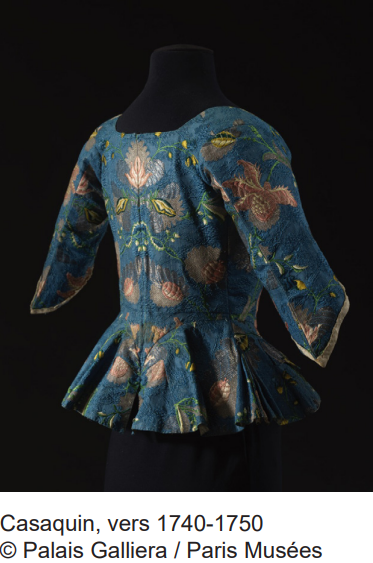
Although the exhibition draws extensively on historical collections, it never presents craftsmanship as something frozen in time.
Historic textiles sit alongside contemporary creations, including works produced specifically for the exhibition, revealing how techniques continue to evolve through new materials, technologies and creative approaches. The dialogue between past and present suggests that savoir faire survives not because it remains unchanged, but because it continues to adapt.
Rather than preserving tradition untouched, fashion constantly rewrites it.
Learning to look differently
Perhaps the exhibition’s greatest achievement lies in the way it changes the viewer’s perspective.
Many of the techniques on display disappear when seen from a distance. Embroidery becomes little more than a shimmer. Weaving dissolves into texture. Hours of labour merge into a single surface.
By bringing visitors closer to the material itself, Tisser, broder, sublimer slows that process of looking down. Attention shifts away from the finished image towards the work embedded within it, revealing the extraordinary precision that often goes unnoticed.
More than craftsmanship
Rather than presenting savoir faire as a catalogue of traditional techniques, the exhibition proposes another way of understanding fashion itself.
Garments emerge as the visible outcome of countless gestures, accumulated over time through collaboration, experimentation and technical mastery. Once that process becomes visible, it is difficult to look at clothing in quite the same way again.
Tisser, broder, sublimer ultimately argues that fashion is not defined only by form or appearance. It is built through material intelligence, shaped patiently, one gesture at a time.
May