
Ralph Lauren’s Spring/Summer 2027 presentation in Milan was not an attempt to reinvent the brand. Instead, it showed how one of American fashion’s most established names continues to adapt its visual language while remaining unmistakably itself.
Presented on June 19 at the brand’s Milan headquarters, the show brought together Purple Label and Polo Ralph Lauren within a single narrative. A polished mahogany speedboat occupied the courtyard, immediately setting the tone for a collection inspired by Italian summer culture, classic boating and the effortless glamour associated with Lake Como. Titled Dream Racers, it moved between relaxed tailoring, nautical references, collegiate dressing and the codes that have defined Ralph Lauren for decades.
Those references were familiar, yet they rarely felt nostalgic. Rather than revisiting the past, the collection explored how established symbols can be reinterpreted for a contemporary wardrobe.
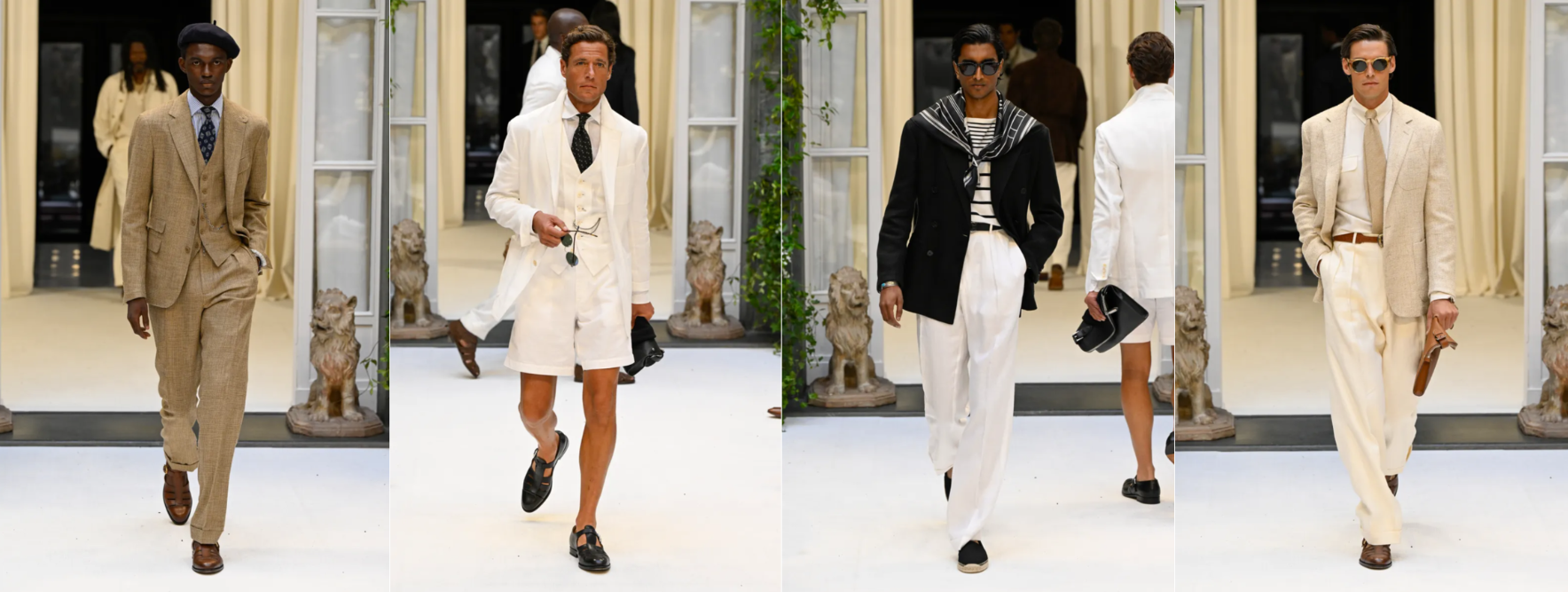
The tie became the clearest example. Long associated with the brand since Ralph Lauren launched his business in 1967, it appeared in its traditional form with softly tailored pinstripe suits, but it was equally treated as a styling element. Printed cravats sat beneath rugby shirts and knitwear, while striped ties became belts, bag straps or decorative details across espadrilles.
That approach reflected a wider shift within menswear. As tailoring continues to return after years dominated by casual dressing, Ralph Lauren suggested that formal accessories no longer need to carry the same rigidity they once did. The tie remained a symbol of elegance, but one that could be worn with greater freedom and interpreted by different generations in different ways.
The same balance shaped the collection as a whole. Purple Label delivered refined tailoring, leather outerwear and softly structured suiting, while Polo Ralph Lauren introduced rugby shirts, checked shirting, denim, camouflage, patchwork and visible mending. Rather than presenting two distinct identities, the collection allowed them to overlap, creating a wardrobe where classic tailoring and casual sportswear existed naturally alongside one another.
Some of the strongest looks emerged from that dialogue. Relaxed linen suits, generous trousers and softly cut double breasted jackets eased the formality of traditional tailoring, while leather motorcycle jackets, field jackets, silk bombers and lightweight puffers introduced movement without disrupting the collection’s overall coherence. The result was not a rejection of classic menswear, but a quieter evolution of it.
That sense of continuity has long distinguished Ralph Lauren from many of its contemporaries. While other luxury houses often pursue constant aesthetic reinvention, Ralph Lauren has built its identity around a consistent set of characters and references. The collegiate student, the sailor, the traveller, the sportsman and the evening gentleman all reappeared in Milan, although they were styled with enough looseness to feel relevant rather than preserved.
The colour palette reinforced that balance. Soft whites, navy, warm browns and faded neutrals established the collection’s refined foundation, while brighter reds, oranges, athletic blues and camouflage greens introduced moments of energy. Together, they reflected a wardrobe capable of appealing to established Purple Label clients, long time Polo customers and a younger audience discovering the brand through vintage fashion and contemporary styling culture.
That intergenerational appeal remains one of Ralph Lauren’s greatest strengths. Instead of distancing itself from its heritage, the brand continues to reinterpret familiar pieces so they can acquire new meaning. A blazer, rugby shirt or repaired denim jacket may evoke tradition for one customer while becoming an entirely contemporary styling piece for another.
Milan provided an equally meaningful backdrop. Although Ralph Lauren’s identity remains deeply American, presenting within one of menswear’s most influential capitals placed those familiar codes inside a city closely associated with tailoring, craftsmanship and understated elegance. Rather than competing with that tradition, the collection entered into conversation with it.
The Italian references extended well beyond the setting itself. The speedboat installation, nautical shirting, deck shoes, racing inspired sunglasses and supple leather outerwear evoked a vision of Mediterranean leisure that felt distinctly Ralph Lauren. Italy became less a geographical reference than a mood shaped by movement, summer and quiet sophistication.
In doing so, the collection reflected a broader shift taking place across luxury menswear. Formal dressing has returned, but rarely in the structured form it once occupied. Today’s customer continues to value tailoring and heritage, yet expects garments that feel adaptable, comfortable and easy to incorporate into everyday life.
Ralph Lauren responded by softening rather than abandoning tradition. Tailoring became more relaxed, prep felt less polished and classic accessories were given new purpose through styling. Luxury was expressed less through exclusivity than through atmosphere, suggesting a way of dressing built around ease rather than display.
That atmosphere extended well beyond the clothes. From the palazzo setting and the speedboat installation to the celebrity guests and the dinner that followed, every detail contributed to the world Ralph Lauren has spent decades constructing. Few brands are as effective at creating an environment in which clothing becomes only one part of a broader lifestyle narrative.
The presentation ultimately demonstrated that relevance does not always depend on radical change. Ralph Lauren’s strength lies in understanding which elements of its identity remain meaningful and how they can be interpreted for a different moment. Milan did not redefine the brand. It simply provided a new setting in which its enduring codes could continue to evolve.
May