
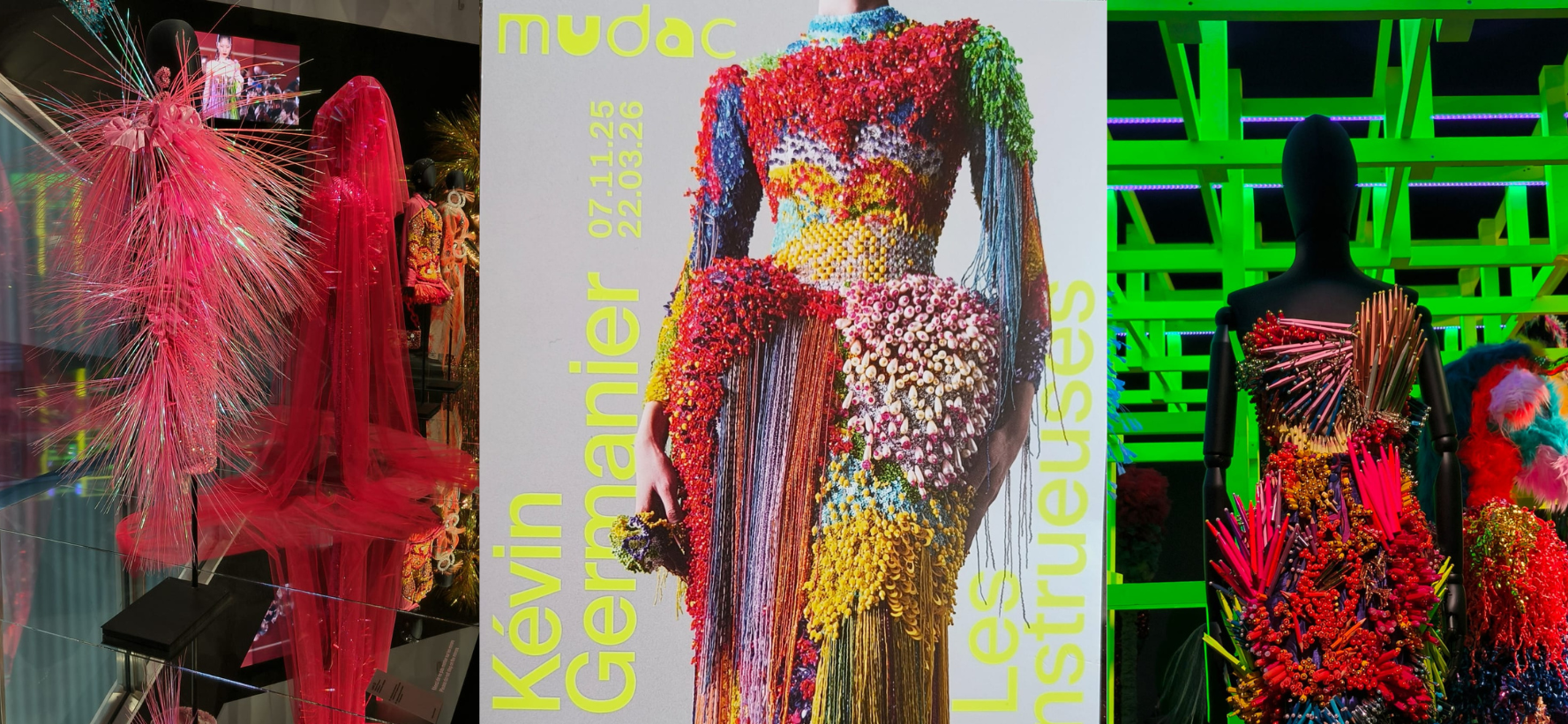

In Switzerland, excess usually makes people uncomfortable.
It feels unstable. Too loud. Too visible.
Kevin Germanier doesn’t try to soften that tension but use it and works inside it.
In the 300m2 exhibition space in Lausanne, colour occupies the room rather than decorate it. Dresses stand upright on their own, dense with beads, sequins, fragments of materials that once belonged elsewhere. The light hits them and breaks apart. From a distance, it looks celebratory. Up close, it’s something else entirely.
It’s labour.
You begin to notice the repetition. The patience. The way each surface is built rather than embellished. What looks spontaneous is, in fact, extremely controlled. The silhouettes hold their shape. The volumes don’t collapse. The garments carry weight. Physically and visually.
Germanier’s work has always been about reconstruction. Deadstock beads, unsold materials, forgotten stock from luxury houses. Nothing is new, and yet everything feels newly charged. The exhibition makes that process visible without turning it into a moral lesson. There’s no didactic tone. Just evidence.
Sketches show planning that feels closer to engineering than fantasy. Samples reveal how many iterations sit behind a single surface. Some early pieces feel almost raw — exuberant, slightly chaotic. The later silhouettes are sharper, more resolved. The excess remains, but it’s steadier.
What’s interesting, especially at the turn of 2026, is that sustainability here isn’t expressed through restraint. It’s not beige. It’s not reduced. It doesn’t whisper responsibility.
It insists on beauty. And that insistence changes the conversation.
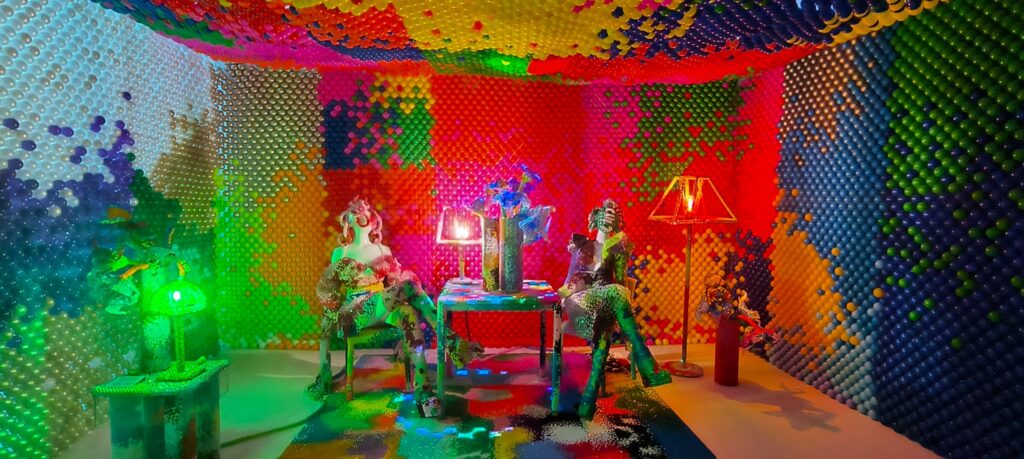
In one room, fragments are displayed on their own. You can study the density of the beadwork without distraction. It becomes clear that repetition is the structure. The shine isn’t superficial, it’s architectural. Remove the embellishment and there is no garment. The surface is the form.
There’s something distinctly Swiss underneath all this colour: precision. Edges are clean. Proportions are deliberate. Nothing feels careless. Even at its most flamboyant, the work is controlled.
Germanier doesn’t reject the idea of discipline but he expands it. He suggests that responsibility doesn’t have to look quiet. That waste, when handled with intention, can become opulence. That reconstruction can feel futuristic rather than nostalgic.
Walking through the exhibition, the feeling is conviction.
May