
Getting dressed has always fascinated Prada. Rather than treating clothing as a finished image, Miuccia Prada has spent decades observing the small decisions that shape the act itself, how garments are layered, adjusted and worn until they become part of everyday life. Fall/Winter 2026 returned to that idea, presenting a collection where layering was no longer simply a way to build a silhouette, but a means of exploring the relationship between clothing, the body and routine.
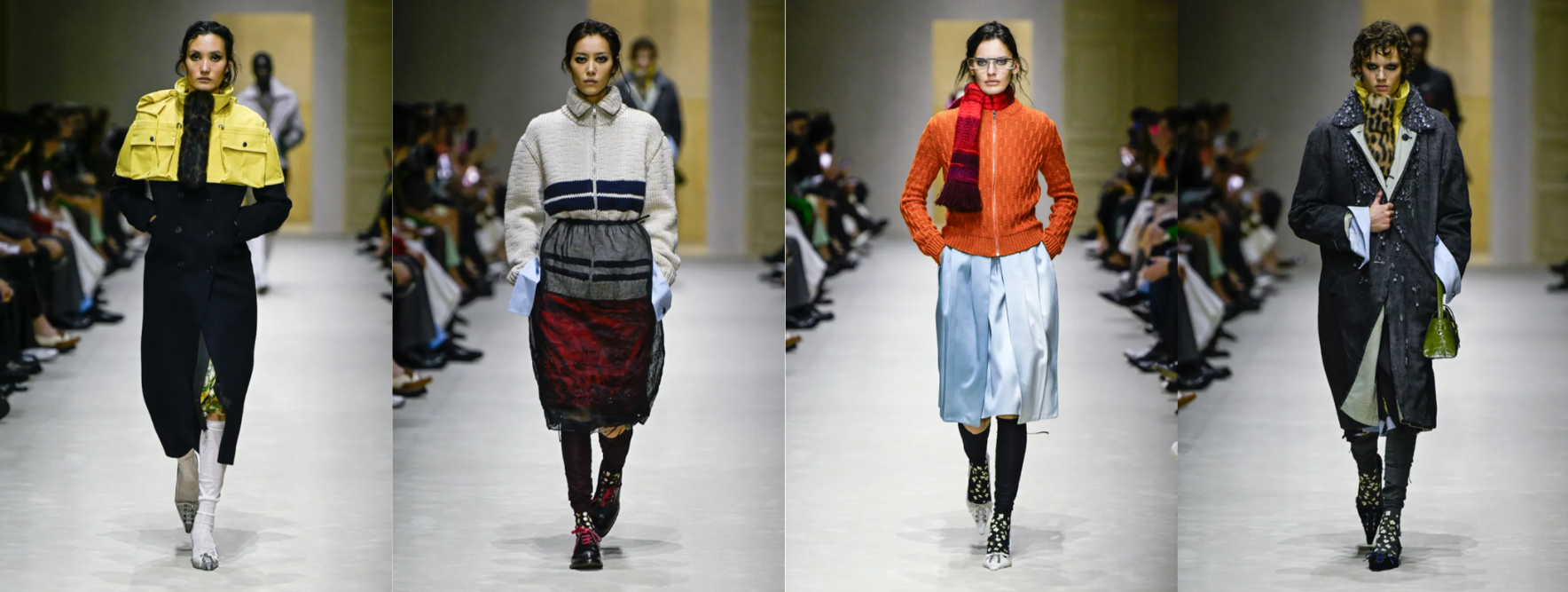
Presented in Milan, the collection resisted the idea of a definitive silhouette. Instead, it reflected the way wardrobes evolve naturally over time. Coats were thrown over jackets, shirts extended beneath knitwear and dresses, skirts appeared beneath trousers and scarves slipped almost unnoticed into outerwear. Nothing felt overly composed. Each look carried the quiet familiarity of clothes accumulated through habit rather than carefully assembled for display.
That intention became clear from the opening looks. Long coats remained open just enough to reveal the tailoring beneath, while shirt cuffs and hems were left deliberately visible under dresses, sweaters and structured outerwear. The layers never merged into a single surface. Each retained its own presence, allowing the eye to move through the silhouette instead of settling on one dominant garment.
What first appeared effortless gradually revealed an exceptional level of control. Hemlines rarely aligned, creating subtle interruptions that gave rhythm to the silhouette, while volume was distributed with such precision that the accumulation of fabric never weighed the body down. The collection suggested complexity without excess, proving that proportion alone can transform familiar garments into something unexpectedly sophisticated.
Colour followed the same logic. Shades of charcoal, tobacco, washed navy, muted olive and softened neutrals created a quiet foundation where attention naturally shifted towards construction and texture. Wool, leather and knitwear each maintained their distinct character, not through contrast but through the way they interacted across successive layers. Colour never sought to dominate. It simply allowed the architecture of the clothes to emerge more clearly.
Perhaps the collection’s greatest strength lay in its attention to the ordinary. A sleeve extended slightly beyond the wrist. A collar rested just off its expected position. A shirt remained visible beneath a dress instead of disappearing entirely. They were almost imperceptible adjustments, yet together they captured the small imperfections that appear every day as clothes move with the body and gradually take on a life of their own.
In Prada’s hands, those familiar gestures became the collection itself. Layering was no longer a practical response to winter or a styling device added at the end of the design process. It shaped every silhouette from within, showing how repetition, proportion and careful observation can create depth without relying on theatricality or excess.
Seen within the wider context of Milan, the collection reflected a broader shift taking place across the season. Many designers seemed less interested in reinventing the wardrobe than in reconsidering it, returning to familiar garments with greater sensitivity and asking how they might be worn differently. Prada approached that question with its characteristic clarity, reminding us that fashion often moves forward not through dramatic change, but through a sharper way of seeing what has always been there.
May