
Fashion weeks are often framed as moments of spectacle. Big stages, amplified silhouettes, images designed to circulate instantly.
But what they reveal is rarely in the obvious.
Beneath the lights, there is always something quieter unfolding — a shift in how designers are thinking, adjusting, recalibrating. Not in declarations, but in choices. In restraint. In what is no longer pushed forward.
Milan this season carried that kind of shift.
Not dramatic enough to headline.
But present enough to be felt across multiple collections.
Not pessimistic.
Not nostalgic.
Simply more measured.
A shift away from amplification
For several seasons, fashion has operated at full intensity.
Volume expanded. Proportions exaggerated. Runways became increasingly scenographic, almost cinematic. Clothes were often designed to read instantly, to capture attention before they could be understood.
In Milan, that pressure seemed to ease.
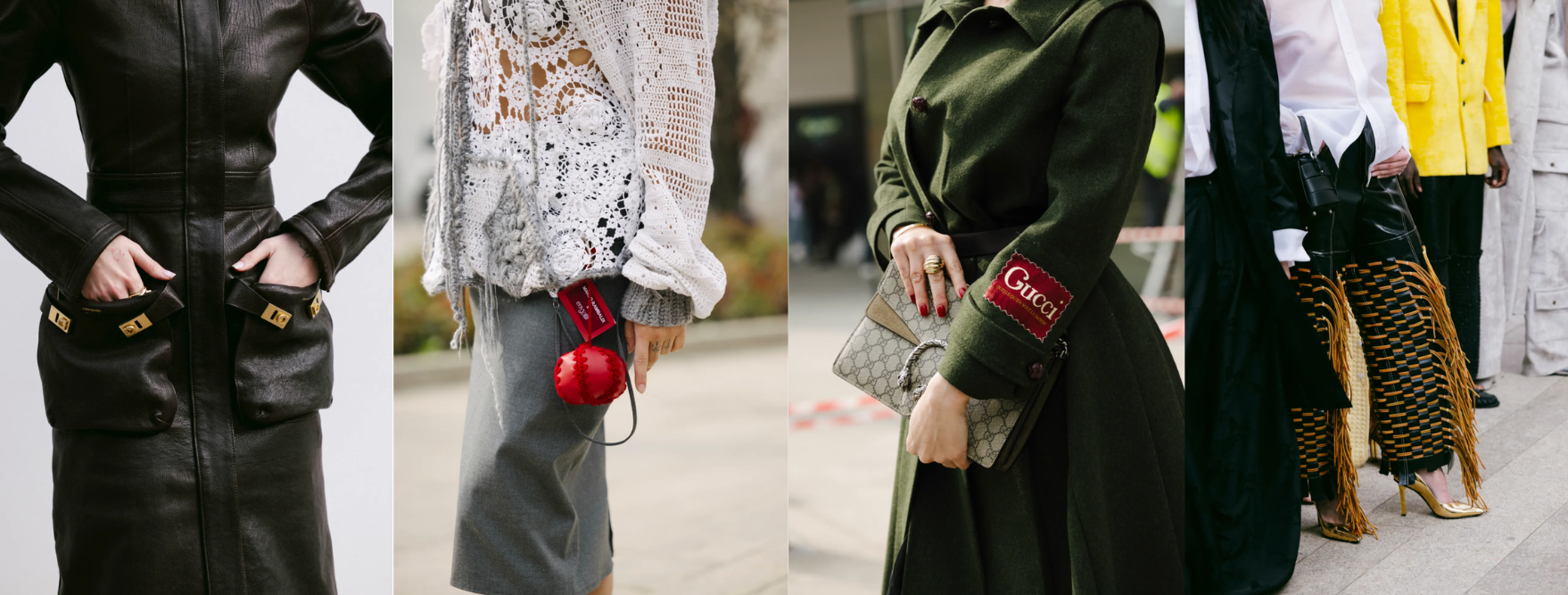
Silhouettes came closer to the body. Not tight, but guided. Coats followed vertical lines instead of inflating outward. Tailoring regained a sense of discipline without becoming rigid.
Even when volume appeared, it felt contained. Controlled from within rather than imposed for effect.
There was less urgency to impress.
More interest in coherence.
Clothes that hold their own
One of the most noticeable changes was how garments behaved without styling.
In previous seasons, looks often relied on accumulation — layers, accessories, complex compositions that created impact through density.
Here, many pieces stood on their own.
A coat carried the look.
A dress held its structure without needing interruption.
A knit had enough presence to define a silhouette by itself.
It shifted the focus back to the garment as an object, rather than as part of a visual system.
You could imagine these clothes off the runway, in motion, in real life — not diminished, just quieter.
The reappearance of craft
This restraint naturally redirected attention.
When colour softens and silhouettes settle, construction becomes visible again. Not as a statement, but as a necessity.
You begin to notice different things:
The exact weight of a wool coat as it moves.
The tension between softness and structure in layered knits.
The precision of a shoulder that doesn’t announce itself, but holds the entire garment together.
Leather was less about shine, more about density.
Knitwear moved away from texture-as-decoration and toward texture-as-form.
Nothing felt overly demonstrated.
But everything felt considered.
A different relationship to time
What lingered most was not a specific trend, but a change in rhythm.
For a long time, collections seemed built around immediacy. The image first. The reaction next. Longevity came, if at all, afterwards.
In Milan, there was a sense that garments were not designed to peak on the runway.
They were allowed to unfold more slowly.
Pieces that might not translate instantly into a striking image, but reveal themselves through wear. Through repetition. Through proximity.
It suggested a shift away from fashion as a sequence of moments, toward fashion as something that accumulates over time.
Adjustment rather than rupture
Nothing in Milan suggested a radical break.
There was no single dominant silhouette, no aggressive new direction imposed across the week.
And yet, something had changed.
The industry, at least here, seemed less interested in reinventing itself through disruption, and more inclined to refine what already exists.
To adjust proportions.
To rebalance materials.
To edit rather than add.
These are quieter movements. Harder to capture, easier to overlook.
But they tend to last longer.
Because they don’t demand attention.
They earn it.
May